
Recognise the Tiny Desk office-concert scene
Understand the desk, red keyboard, front lead, backing performers and camera changes that make the reference recognisable.
The short answer
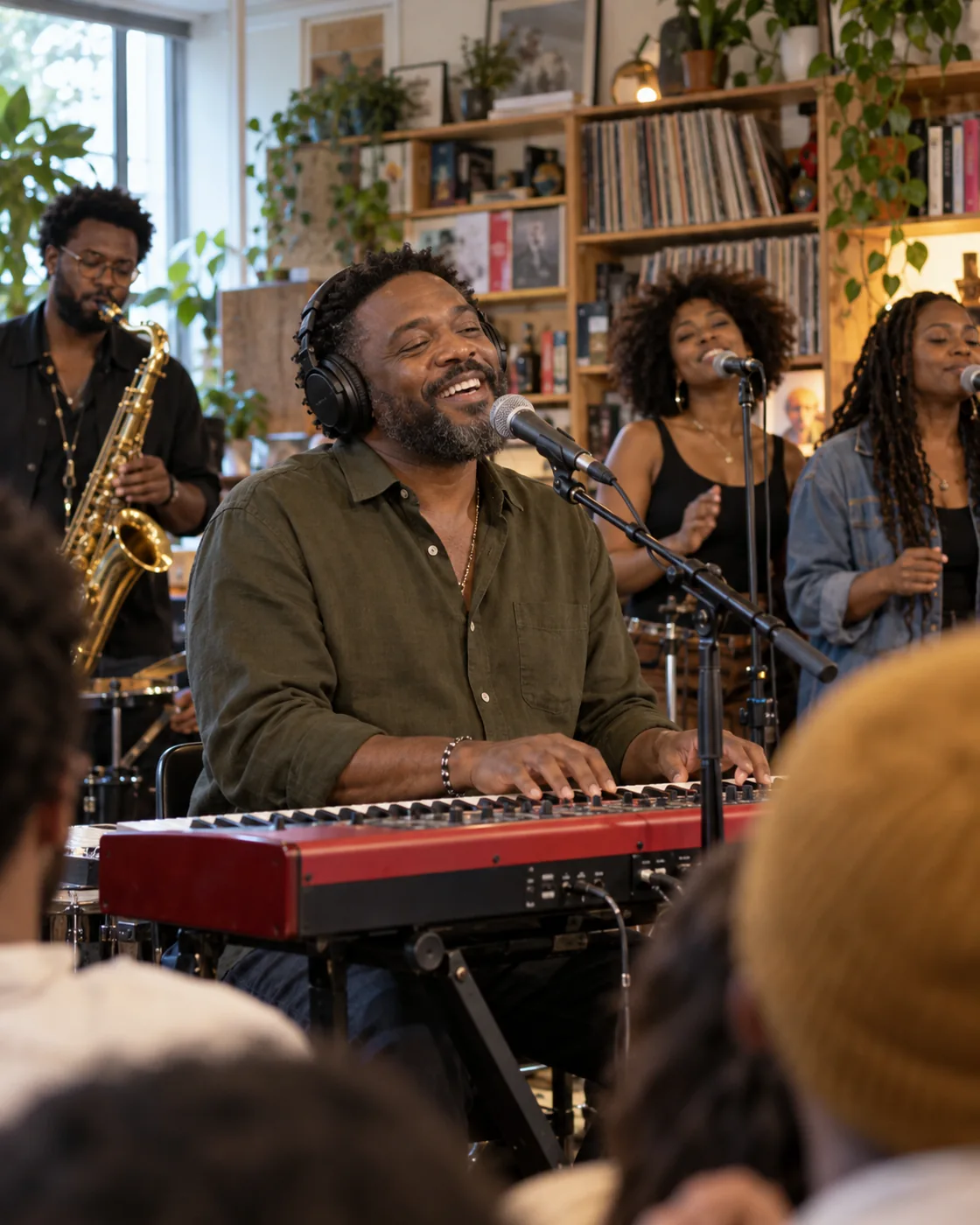
The recognisable scene is a close office concert with a lead at the front and supporting musicians behind. The red keyboard, microphone, headphones, shelves and later instrumental view help establish the reference. Those visual cues are a scene description, not a promise of exact original footage or sound.
In this guide
What to check
| Step | Check |
|---|---|
| Start with the real performance reference | A real concert and an AI reinterpretation have different origins. |
| Read the front of the arrangement | The keyboard and microphone orient the viewer. |
| Look beyond the lead | Backing performers make the scene feel like a band. |
| Distinguish a short version from a full edit | A shorter request must reorganise the beats. |
| Keep the reference and your result distinct | A source performance is context, not proof of your output. |
Start with the real performance reference
The source reference is Charlie Wilson’s NPR Tiny Desk Concert, published on 5 June 2023. The widely reused passage comes from the performance of “Outstanding”. Watch the official source to understand the performance before treating later AI edits as the original. NPR Music official performance
Later meme edits can change performers, duration and camera order. The name Tiny Desk AI describes this recreation context; it does not establish that a generator is affiliated with NPR or Charlie Wilson.
Read the front of the arrangement
The front lead, microphone and red keyboard create a compact performance space. The desk-level camera brings the viewer close to the band rather than placing the performer on a distant stage.
When checking a generated scene, look for coherent space around the keyboard and microphone. The props should remain stable when a hand, face or camera moves past them.
Look beyond the lead
Supporting performers, shelves and office objects contribute depth. A raised arm, shared smile or instrumental cut can carry the rhythm of the reference without becoming a separately selectable product scene.
Different people in the same arrangement are identity variations, not automatically different camera styles. Treat solo, group and pet requests as different input or subject questions when the tool actually exposes them.
Distinguish a short version from a full edit
A 15-second generation has less room than a longer shared reference edit. It may use fewer returns to the lead or a shorter instrumental ending. Judge it against the settings and description you selected.
A model can create a visually related performance without preserving the original camera timing. If exact movement and cuts matter to you, compare the actual reference and result rather than inferring accuracy from the office background.
Keep the reference and your result distinct
An official video explains the source; an external AI clip shows another creator’s interpretation. Neither establishes what happened in your own request. Your work record and complete downloaded video are the useful evidence for that.
Before sharing, check the full sound and picture and respect the rights of people, recordings and footage involved. A familiar set or meme format does not supply music or likeness permission.
Sources: NPR Music: Charlie Wilson Tiny Desk Concert; Sport & State creator interview
Questions about this task
The reference is Charlie Wilson’s NPR Tiny Desk Concert, published on 5 June 2023, with the widely reused passage from “Outstanding”.